To be isolated is always to assert oneself numerically; when you assert yourself as one, that is isolation - Søren Kierkegaard
[1]

When Scott Walker died aged 76, on 22nd March 2019, it brought a slew of articles saying thing such as "pop singer who turned experimental" (The New York Times), "experimental pop hero" (The Guardian), "experimental singer-songwriter" (Rolling Stone), " influential rock enigma" (BBC) and "pop idol turned avant auteur" (NPR Music). Notwithstanding the fact that there no such thing an an
avant auteur, the articles all pointed to the same thing: the teenage pop idol who embraced experimental music in his later years. In fact, Walker was always somewhat experimental, at a time when many pop stars were also experimenting. The interesting thing is the way Walker did it. Whilst The Beatles were pushing new sounds in 1966 on Revolver, Walker was trying out new concepts for songs. The b-side of the single
Deadlier Than the Male was
Archangel, where the pipe organ of the Odeon at Leicester Square heralds a doom-laden tome poem:
Silence
To hear once more
Her footsteps
Down a shadowed corridor
Frightened
You're overdue
The darkest day
Goes on until it's blessed by you
The chorus is pure Scott solo-period pop music, a touch of country but with a minor key twist. I don't imagine any other groups were producing material like this in the mid 60s. The three Walker Brothers, Scott Engels, John Maus and Gary Leeds were famous for anthemic pop songs but it was clear that Walker was already pushing at the definition of this. This was in stark contrast to their
worst work, which was as uncool as could be.
Solo John/Solo Scott
In December 1966 a four-track EP called Solo John/Solo Scott was released, John Maus singing the standards
Sunny and
Come Rain or Come Shine and Scott singing
The Gentle Rain and his own composition,
Mrs Murphy. Whilst The Kinks were creating their own versions of short stories in song, there's something really powerful about this song. The strings add to this soap-opera drama of gossip down a mysterious street, and the actions of the "boy in 22" who seems to be Mrs Murphy's main focus of rumour: "
Poor Mr Johnson being married to a wife who should be caged, It's the child who will suffer, And to think that young man is less than half her age". Musically it's not experimental, but coupled with the lyrics it becomes a Play for Today in song, full a drama, both overt and concealed at the same time.
By the final Walker Brothers album of the sixties, 1967's
Images, Scott continued to try to create these dramas, songs like
Orpheus sound like direct precedents of his solo albums, "
I'll steal your dreams for my shiny gold chain, And you'll wake with your eyes full of rain." The strings swirls across four notes, repeated through the refrain, pulling him further and further away from the lounge voiced entertainer.
Album by album
Links to purchase from Amazon are found within the text.
Scott (1967)
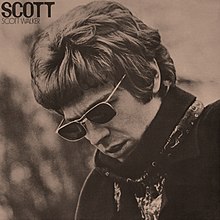
Walker's
first release after the break up of the Walker Brothers held on to the advances he had made within the group. A mature, confident sound emerged through his magnificent baritone voice. This album started Walker's relationship with Mort Shuman's translations of Jacques Brel's work, a roll of tympani kicking the whole record off as he launches in
Mathilde, a song dripping with delightful drama. It also contains the definite version of
Amsterdam (well, other than Brel's original), a version that David Bowie did his best to emulate in his early years. There are no bad songs on this record, whether Walker is crooning
Angelica or intoning his self-penned
Such a Small Love. A personal favourite is
Always Coming Back to You, a song that starts tentatively, questioning: "
What was it like when we were young?", "
Was it only yesterday? I've forgotten anyway" and "
What was it like to hear your name?" A drama of lost love, remembered days, "J
ust to find we've missed our bus, But we'd laugh , kiss, what the hell" and sad realisations, "
Now I go aimlessly at night, Sleep with faces I don't know." It's a bedsit torch song that works perfectly, and sets the template for future such songs. I imagine Mark Almond listening and learning from this.
Scott 2 (1968)
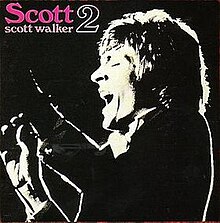
His own compositions move forward in maturity, both lyrically and musically.
The Amorous Humphrey Plugg a tale of a man hoping to escape his mundane world to "seek the buildings blazing with moonlight".
The Girls from the Streets is a stomping, dark song full of incredible imagery demonstrating Walker's desire to move beyond the pop song. Where else would you get lyrics with poetic internal rhymes like, "Snap! The w
aiters anim
ate, Luxuri
ate like planets whirling 'round the sun" It's a song full of tension that is only released when it finishes. And with
Plastic Palace People we have a cold, mysterious tale over rising and falling strings that is punctuated by a chorus with true pop sensibilities. It's a song that could be about anything. Well, I have no idea what it
is about.
Scott 3 (1969)

1969 brought
an album of ten original songs that finishes with three covers (all of Brel's). It is, therefore, a very idiosyncratic album and is certainly a favourite amongst fans of Scott Walker's music. It contains some of his most beautiful and also most surreal music to date. The covers are the only tracks that don't really work for me, as Walker's self-penned songs have clearly stepped beyond the framework built by Brel.
Copenhagen is a European love song that ends with a fairground carousel.
Big Louise hums softly from her "fire escape in the sky" which gave Julian Cope the title of his now
famous and impossible to find compilation album from 1981. (More of Cope later). Poor
Rosemary, another of Walker's creations who wants to escape her world, "hears the clock and it strikes like a hammer, Pounding the nails one day further in the coffin of her youth", and the
Two Ragged Soldier (if they are soldiers) are two hobos like Vladimir and Estragon on the "road of their fantasies". It's incredible to think that the original US versions replaced the incredible, opaque
30 Century Man ("Saran wrap all you can") with the limp Lights of Cincinati but thankfully it's back in its rightful place now. Scott 3 is a remarkable record: a pop crooner breaking out of his pop restrictions and moving into dark territory.
Scott: Scott Walker Sings Songs from his T.V. Series (1969)

For six weeks in 1969, Scott Walker presented a BBC TV show, complete with special guests like
OC Smith and
Blossom Dearie and singing some of his best songs. The BBC have pretty much wiped evidence of the show barring a couple of pilot shows, but a record of him singing in the studio songs he must have performed was released. It seems at odds with the man who had released Scott 3 only three moths before, but it was all done very professionally, I believe. I'd love to see clips just because we all know Scott would have been cool and calm and would have dropped in moments of his unique personality, I'm sure.
This record is very professionally done, Scott sings these standards well, his voice in good form, but compared to what came just before and what was just to come it's a bit of curio.
Scott 4 (1969)
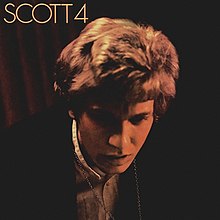
Five months afters his TV Series album Scott Walker released the magnificent
Scott 4. Commercially, it was an absolute failure, possibly due, in part, to being released under his real name, Scott Engel. Also, it was possibly just too eccentric for the tastes of his typical fans. It is a record with no weak tracks, although not everyone agrees with me. In his autobiography, Repossessed, Julian Cope describes the moment when. listening to
The Seventh Seal, he comes to a realisation that Walker is ridiculously pretentious, and never listens to him again. I love the song, as much as I respect Cope's opinions, and I like to note that Scott Walker's music could be provocative enough to turn away a long-time and well known fan.
Every track is written by Walker and he produces some of his very best work, from lush romantic pop like
The World's Strongest Man to guitar driven and somewhat soulful rock like
Get Behind Me. One of the most notorious songs,
The Old Man's Back Again (Dedicated to the Neo-Stalinist Regime) which allegedly refers to
Operation Danube, the 1968 invasion of Czechoslovakia by five Warsaw Pact countries ("
A shadow cross the sky, And it crushed into the ground, Just like a beast"). Like the Jorge Luis Borges story,
The Garden of Forking Paths, a different timeline exists in an alternative universe where this record is a huge hit, and drives Walker on to producing similar intelligent songs driven by his powerful baritone. But perhaps we miss out on the heights yet to come.
'Til the Band Comes In (1970)

Another
album front loaded with originals and rounded off with five covers (I've always liked his
Reuben James), Till the Band Comes In doesn't go to where it could have done following Scott 4, but it's a very interesting record. It hints at his more abstract work with the opening drips of rain, strings and children's voices leading onto
Little Things, which would not have sounded out of place on Scott 3, and keeps his work deep in the darkness:
It's on nights like these, That your neighbor dies, 'Cos he put a gun to his head, He was so alone, He had nothing left
There's a smoky, jazz driven core to many of the songs, such as
Time Operator and
Joe, and Walker's voice is absolutely fantastic, expressive and note perfect.
Long About Now, sung by Esther Ofarim, sounds like a soundtrack song from a film I want to see. It's another great Scott album, although as Pulp sang, the "second side of Til The Band Comes In...[is] going to let you down, my friend". The originals far outweigh the covers. By the way, the producer of that Pulp song, Bad Cover Version? One Scott Walker.
The Moviegoer (1972)

And so now we come to Scott "wilderness years". A few albums that don't include any of his original songs. As ever, he can sing the hell out of this material, but I'm sure being forced to sing some of these songs by his record company helped form his focus in later years. The
songs are all from films (hence the title). Ones that work for me include Neil Diamond's
Glory Road and the western sounding Morricone melody of
The Ballad of Sacco and Vanzetti. It at least reaches the drama of Walker's own songs. Many of the sings don't, but just contain his peerless voice and therefore are dripping with some drama, weak as the songs are. There's an odd lyrical version of the theme from The Godfather, called
Speak Softly Love which adds nothing to the striking music.
Any Day Now (1973)
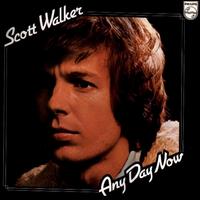
Another
record of covers came in 1973. This record is striving for the adult-orientated pop market. The strings are warm and welcoming, the music nonthreatening. It failed to chart and gave no hit singles either, despite the stellar cast of songwriters, including Jimmy Webb, Burt Bacharach, Randy Newman, Barry Mann and Bill Withers. It's lovely and comforting for the most part, although the Brazillian sounds of Caetano Veloso's
Maria Bethania threaten to push the record into more interesting places, spoiled, however, by Walker using a cod-Calypso accent on the songs.
Stretch (1973)

Signing for CBS, I wonder what the record company thought they had with Walker. What they did is
package up a record of "more of the same": fairly weak cover versions of saccharin songs. There's a nice country soul feel to his version of the Oldham-Penn song
A Woman Left Lonely, a song you can imagine Gram Parson's singing. Stuck in the middle is a funky Bill Withers' track,
Use Me and whilst I've often thought that the one thing Walker struggles with is authentic soul music, this track stand up as the best of the record for me. Withers' tight tune slinks forward slowly under Walker's expressive voice. None of the other songs really take me anywhere, and I smile at the one line description in the Wikipedia article: "
Stretch received negative reviews from the majority of critics."
We Had It All (1974)

In 1975, the Walker Brothers reformed. This was following another unsuccessful solo album.
We Had It All is full of acoustic guitars, and is underpinned by the country sound of songs by Billy Joe Shaver, who wrote four of the tracks. It feels as if there was an aim to position him in the country rock market. Although many of his albums had the odd country sounding song, there are no standout track here that make that choice worthwhile. A commercial and creative dead-end, he probably had nowhere else to go but back to the band. The reformed Walker Brothers led to the next chapter in Walker's development.
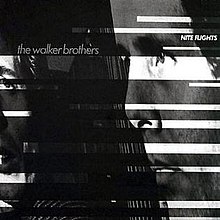
Nite Flights (1978)
A letter is an unannounced visit, the postman the agent of rude surprises. One ought to reserve an hour a week for receiving letters and afterwards take a bath - Nietzsche
Following two Walker Brothers' records, that include great tracks like
No Regrets and
We're All Alone, the band came to put their
last record together. All contributing songs, the record gave us the first original material from Scott Walker since 1970. Listening to the four tracks Scott wrote for the first time sticks deep in my mind. I didn't know what to expect, but I could have never expected what we got.
Shutout
The pulse of the bass and the wail of the guitar immediately set
Shutout apart from previous Walker Brothers work. This is no cool country rock. Scott (clearer in the mix) and John sing in strangely detached, processed voice. Lyrics as cut up as a William Burroughs novel. The listening Walker had been doing, to Bowie's Low and "Heroes" had moved him to a whole new experimental place, with a guitar solo screaming over a Neu-like incessant beat.
Fat Mama Kick
When discovering this album, I had been blown out of my chair by Shutout, and was still reeling when the electronic bass noises of
Fat Mama Kick came into my hearing. Lyrics sliced even further into individual images:
Sunfighters...The gods are gone...master corpses...Peeled raw, betrayed ; a melody that hovered between being in tune and dissonance and the yawp of the repeated, chanted chorus; "Deaf! Dumb! Blind!" It's an incredible piece of work.
Nite Flights
In many way,
Nite Flights is the most conventional of the Scott songs, although the strings build in a different way to how he's previously used them. There's still a cold austerity to the track, and the chorus, two twisting voices is again staying just in tune. The influence from Bowie is clear here, and the guitars try to emulate Fripp's magic on the "Heroes" album. Still, the development from what sat under the Walker Brothers' title is profound. Funnily enough, Bowie covered the song himself years later.
The Electrician
On his final track,
The Electrician, Walker pushes the boundary of "pop music" as art form. Collapsing under the weight of a black hole, vocals phase in, echoing above a precipice:
Baby its slow, When lights, Go low. Walker sets out his vision as he sings at the top of his register, almost straining through the imagery of his lyrics "
Jerk the handle". This is film soundtrack as 7-inch single. The string section about 3 minutes in is the score to a long lost Sergio Leone film, both at odds wiht what has come (and is yet to come) and also perfectly fitting. A single bounce of electronic bass invents a thousand bands. I still smile at the thought of Brian Eno, bemoaning the fact that no one has yet gone beyond this track, as he does on the 30 Century Man documentary.
Climate of Hunter (1984)

It took six year until the
next album from Walker. The wait is worth it; he pushes his music into a place that lies between past and future (note: not the present). Surely laughing at the waiting critics with that
opening line:
This is how you disappear. In fact, this is how you reappear: different, developed, serpentine. Driven by bass and drums through most of the tracks, it is a new type of music using the approach seen in Nite Flights. Almost out of tune, but also melodic, abstract, requesting difference interpretations to his imagery: "
From the host of late-comers, A miracle enters the streets, Shining with rain", he sings, on the abstract titled
Track 3.
A song like
Sleepwalkers Woman again shows the relationship between cinema and song (cf: The Seventh Seal), because when his songs sound like they are birthing new films as they play, they slice icy images across your eyes: "He has gazed from my windows". This is not music to play at dinner parties, because it demands to move beyond easy listening and to be heard.
Tilt (1995)

Another nine years, and another leap forward.
On Tilt, Walker's voice strains even higher as the farmer on the opening track,
Farmer in the City. "Do I hear 21, 21, 21...? I'll give you 21, 21, 21" the auction sounds out before the operatic piece builds over the Strings of Sinfonia of London. It's an emotional work of art ("
Paolo/Take me with/You") and this sense is repeated throughout the record. Walker seems to have moved beyond us all creating new ways of writing music: a former pop star in a cold spotlight, intoning mystical ice behind a hidden orchestra. Things do not always fit together, deliberately discordant, untouchable and distant. Swashes of keyboards play carefully behind Walker.
On Patriot (A single) he starts,as with many of these tracks, slowly, carefully, before bursting into "
As-in-the wind, As-in the rain, As-in-as in, As-in-without" - a cyclic melody. A song from a long lost musical, accompanied by piccolo and military drum.
Pola X OST (1999)

I have not seen Léos Carax's film, Pola X, but a
soundtrack scored and produced by Walker seems like a natural step in his journey, taking the lyrical imagery and distilling it to mainly pure music. A soundtrack album for many artists is a collector's curio, but here it is more Walker music, and worth finding and cherishing, because he is not content to simply accompany the scene but also will not intrude. Like all of his best music, it sits between two ideas: it's overt and hides underneath. It is symphonic (
Isabel) and cut up slices of noise (
Never Again), murderous power chords in darkened alleyways (
The Church of the Apostates) and music that would fit on any of his solo records (The Time is Out of Joint).
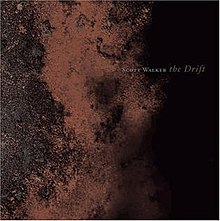
The Drift (2006)
It took a break of seven years for Walker to complete
The Drift, and to me it is a masterpiece amongst his masterpieces. From the second the crime drama arpeggios of
Cossacks Are plays out we are captives in Scott's world. When I first heard Trout Mask Replica I was amazed at how Beefheart managed to create melodies that seemed like they were from different songs to the accompanying music. Here, Walker goes one step further, shifting that connection: sometimes the melody stands outside the rest of the song, and then suddenly they intersect, often with a pause, a breath, and a chance for Walker to intone.
Jolson and Jones is a horrorshow musical from the relentless synthetic violence, snapping drum and dark imagery of "As the grossness of spring lolls its blooded head". It's Walker as avant-garde comedian too. He knows what he's doing when yelling, "I'll punch a donkey in the streets of Galway!" but the whinny of the screaming donkey in the song is painful and difficult too. Famously, he had his percussionists punching a slab of pork during
Clara and it strikes me that he's committing to authentic sound, to analogue noise, to get as close as possible to reality
[2].
And Who Shall Go to the Ball? And What Shall Go to the Ball? (2007)

An instrumental in four movements, commissioned by London’s South Bank Centre and given to choreographer Rafael Bonachela and the able-bodied and disabled dancers of Candoco, this rarity comprises sharp electronic and analogue blasts of noise. A music of "edgy and staccato shapes or cuts, reflecting how we cut up the world around us as a consequence of the shape of our bodies"[3].
It give the image of scrolling through a radio station, staticless for a digital age, alighting on the 2nd movement, like an escapee from Tom Waits' The Black Rider, that stomps under cello rasps. As a whole Walker demonstrates the beauty he can create with ease, and the challenge he affords us all.
This record is often hard to find but worth it.
Bish Bosch (2012)
I hear an abundance of melody in it, and even better melody than I wrote before[4]

This was seen as the third part of a trilogy: Tilt - The Drift -
Bish Bosch, and so is very much in the vein of the others, but to me it is a much more challenging piece of work. This is music as a declaration of war, a full break from the past. As he said himself, "most of my contemporaries and listeners from that period hate the music I’m making now,"
[4] like the industrial drill of the opening drum loop on
'See You Don't Bump His Head', and occasional groping, dark baritone guitar lines. As before, the deranged choirboy voice returns, sometimes alone in isolation. On
Corps de Blah Walker plays with words like he plays with sound, putting things together with alchemy: "Cholesteroled mansions crowded with sulphured air". The remarkable centerpiece of the record is
SDSS1416+13B (Zercon, A Flagpole Sitter), a thunder of insults, jokes and koans (such as "Y
ou're so boring, you can't even entertain doubt."). The title is explained
here as the identification of an object in the Sloan Digital Sky Survey (SDSS) catalog.
Epizootics! has a groove built out of wind, string instruments and percussion with a lyric to match:
Chirp chime clambaked cups. Writing in isolation during the coronavirus pandemic, this songs touches a nerve. Epiztooics relate to diseases temporarily prevalent and widespread in an animal population. At the moment we are that animal population, "
Clouds crawling through protracted blue/Like souls of insects". The music makes you listen, hammers at you, pauses and jumps back. A new jazz. Epizootics also was the language of hipsters in the forties. "Epizootics!" they would say, meaning cool.
Soused (2014, with Sunn O))))

Name me a song by the Beatles and I can hum the melody straight away. The songs are in my blood and the melodies are memorable enough to live forever. Do the same for a Sunn O))) track and I'd struggle, even though I own most of their work. Their detuned industrial approach to music is music as artform, but not immediately memorable. Joining up with Scott Walker, as they do on
Soused, makes perfect sense. Walker's music has always sat at the point of juxtapostion of ideas. Opener
Brando soards like a Western aria ("Across the wide Missouri") and sinks under the weight of the drone of Sunn O))) guitars. This is music that fills me with genuine excitement, a track like
Bull is more dangerous and confident than anything else you can find, ensuring you have no place to relax:
Quilt of corpses
Bump the beaky
Peal no
Pitch drop
This is a
vital record. The last real album by Scott Walker. His last words "
will be sung".
The Childhood of a Leader OST (2016)
 This soundtrack
 is Scott Walker as real composer. His score sounds like an aborted Hitchcock theme following the story of a young boy who will, we see, grow to be the leader of fascist state. The music is part thriller, part dance, part mystery music and lives as an isolated entity. There's plenty of Walker in it's instrumental moves: at times brittle with beauty, other times hanging onto melody with fingertips, and throwing in references to his previous work with a smile. Walker writes for strings with huge confidence, and demonstrates his musicality with aplomb. He shows that discordance is a choice he doesn't have to make, throwing together gentle lines (eg
Cutting Flowers) that flow from piece to piece. A soundtrack you can take with you day to day.
Vox Lux OST (2018)

Scott Walker's
final album was in fact a contribution of 10 instrumental pieces for the soundtrack of 2018 film Vox Lux starring Natalie Portman. The album contains Portman and Raffey Cassidy performing songs written by Sia, and then the instrumental film score be Walker. Walker writes well for strings, especially creeping cellos, although there are punches of voiced synthesizers that creep through from time to time.
It means that Walker's last vocal performance is
Lullaby, a song I had hear 16 years previously on
Ute Lemper's fabulous
Punishing Kiss. Listening to Walker on this track, you hear him pushing his voice, droning two note guitars behind, classic breaks into silence and wonderful playfulness ("Hey non-e non-e"). "The most intimate/Personal choices/And requests/Central to your/Personal dignity/Will be sung."
Notes
[1]: Either/Or: A Fragment of Life
[2]: On the 28th of April 1945 Benito Mussolini was taken for execution by members of the Committee of National Liberation for Northern Italy. Claretta Petacci [his mistress] insisted on dying with him. They were shot, the bodies piled into a truck and taken to the Piazzale Loreto at Milan to be strung up by the heels side by side, their heads about six feet from the ground. They were mocked, vilified and riddled with bullets by the crowd that had gathered. [Note from album sleeve]
[3]: Press release: SCOTT WALKER - And Who Shall Go To The Ball?
[4]: MP3s are a Disaster. spin.com